
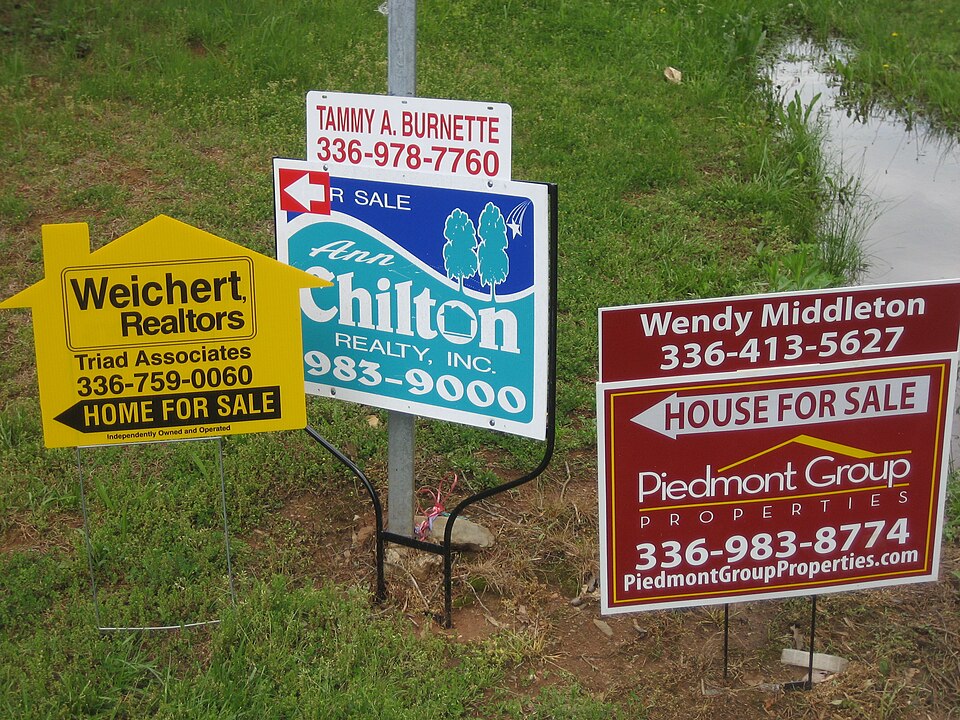
For many Americans, the dream of owning a home is still viable, but it has become substantially harder to achieve, especially for first-time and moderate-income buyers.
The clearest evidence is affordability. Harvard’s Joint Center for Housing Studies found that by late 2025, the monthly payment on a median-priced existing single-family home was about $2,420, nearly double the roughly $1,240 payment at the end of 2020. The income needed to afford a median-priced home exceeded $100,000 in 169 of 387 U.S. metropolitan areas.
About 65% of U.S. households are unable to afford a median-priced new home in 2026, and the affordability problem is substantially worse for lower- and working-income families. High housing costs have contributed to many young adults remaining in the parental home; in 2025, 58% of Americans ages 18 to 24 and 16% of those ages 25 to 34 lived with their parents. Harvard’s 2026 housing report reinforces the broader problem: a household needed more than $120,000 in annual income to afford payments on the median-priced home, compared with about $66,000 in 2020.
The U.S. housing market has entered a period of pronounced slowdown as high mortgage rates, elevated home prices, and broader affordability pressures discourage many Americans from buying homes. After years in which limited supply and intense demand pushed prices sharply higher, the market in 2026 is showing clearer signs of reduced activity. The major shift began in 2022, when mortgage rates rose sharply from the unusually low levels of 2020–2021. Higher borrowing costs reduced buyers’ purchasing power. By 2023 and 2024, existing-home sales had fallen to their lowest levels in nearly 30 years, according to the National Association of Realtors.
Buyers have more homes to choose from in many areas, but the financial barriers to homeownership remain substantial. To help homeowners, states such as Florida are considering policies designed to reduce some of the ongoing costs associated with owning a home, including property taxes.
National housing statistics illustrate the slowdown. Sales were 1.2 percent lower than a year earlier. Meanwhile, the number of unsold existing homes increased to 1.62 million, representing 4.9 months of supply. Despite weaker sales, the national median existing-home price was still $429,100, 1.6 percent higher than a year earlier. These figures show an unusual combination: transaction activity is weak, inventories are increasing, yet prices remain high enough to exclude many potential buyers.
The conditions in the new-home market provide a similar picture. The Census Bureau reported that new single-family home sales reached an annual rate of 684,000 in August 2026, about 2 percent below the August 2025 estimate. To put this in perspective, in 2000 about 1.57 million homes were started in the United States.
The median new-home sales price in 2026 was approximately $393,700. At the same time, builders had about 483,000 new homes available for sale, equal to 8.5 months of supply.
As of October 1, 2026, Freddie Mac reports the average U.S. fixed mortgage rates at:
- 30-year fixed: 7.28%
- 15-year fixed: 6.60%
The 30-year rate rose from 7.03% the previous week. The 30-year average was 6.30% one year earlier, so borrowing costs are materially higher than in October 2025.
Homebuyers must also overcome costs beyond the mortgage itself. A purchaser generally needs money for a down payment, closing expenses, property taxes, homeowners’ insurance, maintenance, and repairs. These expenses can make homeownership difficult even for households with stable employment. In markets where home prices have risen faster than household incomes over several years, saving for a down payment can take considerably longer. First-time buyers are particularly affected because they usually cannot use equity from the sale of an existing home to finance their next purchase.
Florida illustrates another important dimension of the affordability debate: the cost of remaining a homeowner after a purchase has been completed. In June 2026, Florida lawmakers approved a proposed constitutional amendment called “Save our Homes from Excessive Property Taxes,” which is scheduled for the November 2026 general-election ballot. If approved by voters, the measure would expand the homestead exemption applying to non-school property taxes. For qualifying residents who establish or maintain their homestead by the end of 2026, the exemption would rise to as much as $150,000 of assessed value in 2027 and $250,000 in 2028, with inflation adjustments beginning afterward.
Supporters of property-tax reductions argue that lower taxes can reduce the continuing financial burden of homeownership, particularly for residents facing higher insurance, maintenance, and other household costs. Lower annual tax bills could allow homeowners to retain more disposable income and potentially make ownership more sustainable.
The policy also involves fiscal tradeoffs. Counties and municipalities rely heavily on property-tax revenue to finance services such as public safety, infrastructure, and other local functions. Florida’s proposal contains provisions governing how remaining property-tax revenue may be used and creates a framework for state assistance with certain local services. The practical effects would depend on local property values, tax rates, government budgets, and how the Legislature implements the constitutional changes.
Overall, the housing slowdown demonstrates that home affordability depends on more than the advertised price of a house. Mortgage rates, household incomes, insurance, taxes, maintenance costs, and available inventory all influence whether families can realistically purchase and keep a home. Florida’s property-tax proposal addresses one part of that equation by attempting to reduce recurring tax costs for property owners. However, the wider national housing challenge will likely require changes in both financing conditions and the supply and cost of housing before homeownership becomes substantially more accessible to many Americans.
The housing slowdown has become a global issue as high borrowing costs and stretched household finances weaken demand in many major economies. According to the Bank for International Settlements, inflation-adjusted global home prices fell 1.2 percent from a year earlier in the first quarter of 2026, compared with a 0.5 percent decline in the previous quarter. Real prices declined 0.2 percent across advanced economies and 2.0 percent in emerging-market economies.
The downturn, however, is not uniform. China and Canada experienced some of the largest declines, with real home prices falling about 7 percent year over year in the first quarter of 2026, while New Zealand recorded a decline of about 4 percent. By contrast, prices continued rising strongly in some European and developing markets, including Portugal, Bulgaria, and parts of Latin America. This means the current global slowdown is better described as a period of weakening and divergence rather than a synchronized worldwide housing crash.
