
I was about 10 years old when the Army-McCarthy hearings took place. My family did not own a television, but much of the country did. They were mesmerized by the hearings that took place over 46 days. Roy Cohn was chief counsel for Senator Joseph McCarthy’s attorney during the hearings in 1954. During the hearings, Cohn constantly whispered in the ear of Senator Joseph McCarthy. McCarthy claimed that the Army was harboring communists. By contrast the Army claimed that Cohn “threatened to wreck the army” because the army would not give special privileges to Cohn’s friend, David Schine.
I did not think about Roy Cohn until I moved to New York City. Until his death in 1986, Roy Cohn received a lot of media attention. I was surprised that Cohn, who was Jewish, was praised by Catholic officials after his death. They acknowledged his charitable assistance to the Arch Diocese during his lifetime. Cohn and Cardinal Spelman enjoyed a close relationship.
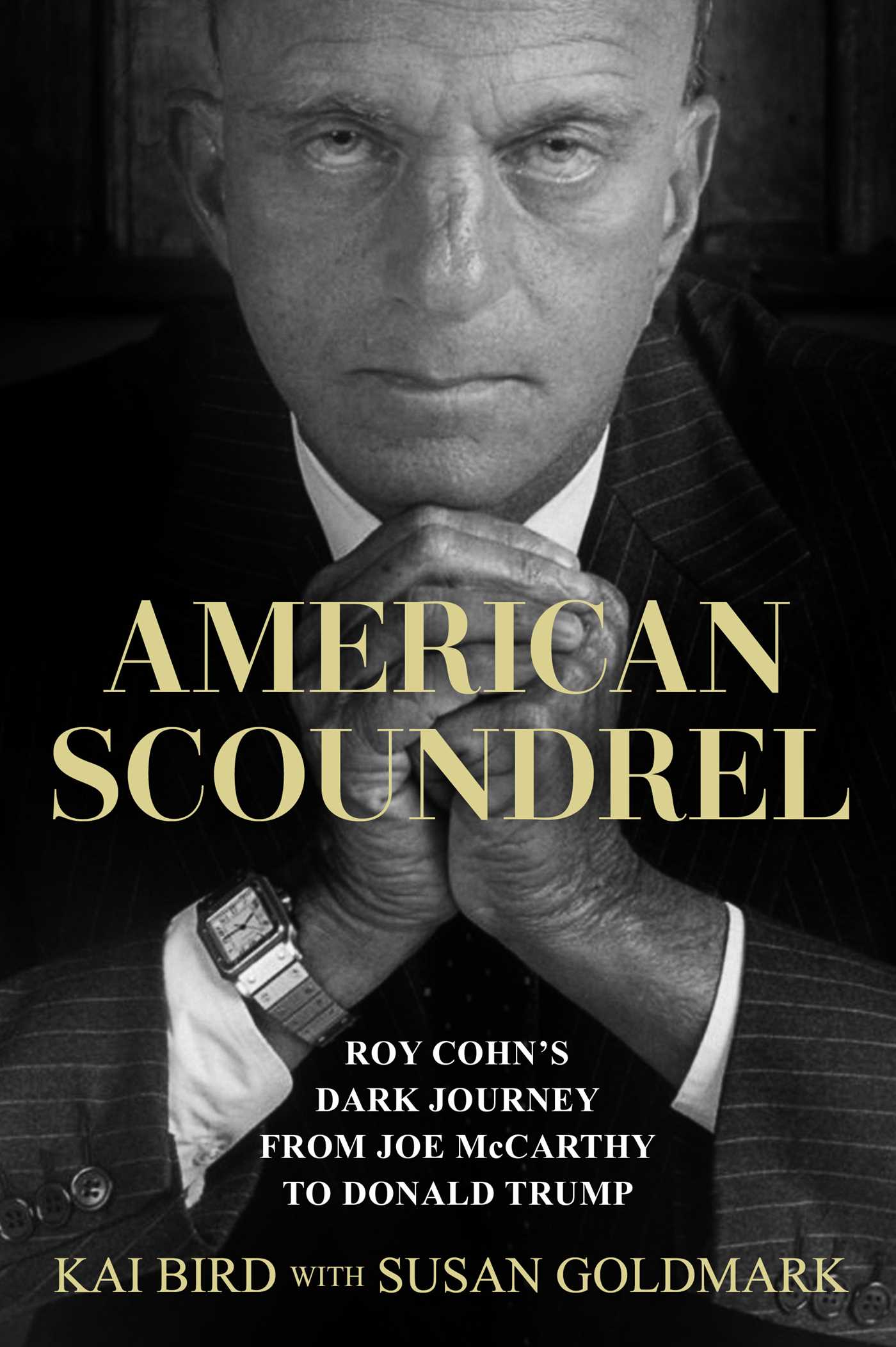
In American Scoundrel: Roy Cohn’s Dark Journey from Joe McCarthy to Donald Trump, Pulitzer Prize–winning biographer Kai Bird, working with researcher Susan Goldmark (his wife), examines one of the most influential and destructive political operators of twentieth-century America. The resulting biography is meticulously researched, briskly written, and deeply unsettling. It succeeds not merely as the story of an unscrupulous lawyer, but as an account of how power can flourish when spectacle, personal connections, and relentless aggression overwhelm truth and institutional restraint. Roy Cohn did not give a damn about the truth. For him, the only thing that mattered was winning for his clients. Cohn famously said, “Don’t tell me the facts of the case, just tell me the name of the judge.”
Roy Cohn first achieved national notoriety as a young federal prosecutor involved in the espionage case against Julius and Ethel Rosenberg. Cohn took lifelong pride that he spoke ex parte to Judge Irving Kaufman, convincing the later to give both Julius and Ethel Rosenberg death sentences.
Cohn later became chief counsel to Senator Joseph McCarthy, helping conduct investigations that humiliated witnesses, destroyed careers, and transformed unsupported accusation into political theater.
Following McCarthy’s downfall, Cohn reinvented himself as a New York lawyer and fixer. His clients included wealthy businesspeople, celebrities, politicians, real-estate developers, and organized-crime figures. Among those he advised was a young Donald Trump, who absorbed Cohn’s methods of attacking opponents, manipulating the press, refusing to apologize, and declaring victory regardless of the facts. For 12 years until his death, Cohn was Trump’s primary attorney.
Bird and Goldmark’s most important achievement is demonstrating that Cohn was not simply an isolated villain. He depended upon a broad network of respectable people who condemned his behavior publicly while seeking his assistance privately. Judges, journalists, politicians, socialites, and business leaders attended his parties, accepted his favors, and returned his telephone calls. Some disliked his politics but valued his gossip; others were repelled by his corruption but wanted access to his contacts. Cohn’s career exposes a recurring weakness in American public life: institutions often tolerate misconduct when the person responsible remains entertaining, connected, or useful.
It is interesting the constellation of people that were part of Cohn’s life. Some relationships were genuine personal friendships—particularly those with Walters, Newhouse, Schine, Trump, Fraser, and the Adamses. Others combined friendship with legal representation, political influence, business dealings, or participation in Cohn’s social circle. Cohn’s clients frequently became his friends, making the distinction difficult.
J Edgar Hoover
Donald Trump
Barbara Walters
Andy Warhol
Norman Mailer
Roger Stone
Paul Manafort
William F. Buckley Jr.
William Safire
Samuel “Si” Newhouse Jr.
Estée Lauder
Ronald Lauder
Rupert Murdoch
George Steinbrenner
David Schine
Cindy Adams
Joey Adams
Steve Rubell
Ian Schrager
Cardinal Francis Spellman
Senator Al D’Amato
Andrew Stein
Peter Fraser
Ronald Reagan
Nancy Reagan
Senator Jacob Javits
Walter Winchel
Prominent Mobsters who Cohn represented and befriended:
Frank Costello
Vito Genovese
Carlo Gambino
Anthony “Fat Tony” Salerno
Vincent “The Chin” Gigante
Cohn had at least two powerful enemies—Robert Kennedy and Robert Morgenthau, a Manhattan Prosecutor.
The book traces the formation of Cohn’s worldview to his privileged but emotionally complicated upbringing. Born to a prosperous Jewish family, he learned early that relationships could be treated as transactions and that influence could bend supposedly neutral rules. To induce Roy Cohn’s father, Al, to marry his homely mother, Dora, the Cohn family bought Al Cohn a judgeship ($25,000—today that would be about $250,000). Both parents loved Roy but hated one another.
Roy Cohn entered Columbia Law School with the help from family connections and quickly developed the habits that defined his career. Loyalty meant protecting useful allies, while law was less a binding system than a collection of instruments to deploy against adversaries. He rarely acknowledged mistakes and treated every investigation as proof that hostile elites feared him.
Cohn’s contradictions give the biography much of its psychological power. He was Jewish yet allied himself with people who trafficked in antisemitism such as Joe McCarthy. He was a closeted gay man who helped persecute suspected homosexuals during the McCarthy era.
He demanded loyalty but often failed to pay employees and creditors. Cohn presented himself as a defender of law and order while repeatedly facing allegations of bribery, perjury, extortion, tax evasion, and professional misconduct. He survived three criminal trials without conviction, reinforcing his conviction that rules applied only to people lacking his nerve and connections. Shortly before his death in 1986 from AIDS, he was finally disbarred.
Bird writes with admirable clarity, and the narrative moves easily through courtrooms, Senate hearings, nightclubs, newspaper offices, and Manhattan townhouses. Newly obtained FBI records help expose discrepancies between Cohn’s sworn statements and the documentary record. Interviews, including conversations with Trump, illuminate how Cohn cultivated influence through favors, intimidation, and personal attention. The accumulation of colorful incidents makes the book highly readable, though the parade of gossip, betrayals, financial evasions, and sexual details occasionally threatens to overwhelm the larger historical argument.
Bird and Goldmark convincingly describe Cohn as a narcissistic con artist, but this interpretation can make him appear almost pathologically self-created. The repression and homophobia of the McCarthy period, for example, helped create the secrecy that Cohn simultaneously exploited and suffered from. His death from a disease (AIDS) he refused to name was not simply another instance of personal dishonesty; it also reflected the stigma surrounding AIDS and homosexuality in the world he had helped construct.
The connection to Trump is unavoidable and generally persuasive. Cohn taught Trump to counterattack, dominate the news cycle, threaten litigation, deny wrongdoing, and equate compromise with defeat. Yet the book’s lasting importance extends beyond that relationship. Cohn represented a style of public life in which publicity substitutes for credibility and power becomes its own moral justification. Trump amplified that style, but he did not invent it.
American Scoundrel is an absorbing and disturbing biography of a man whose influence survived his death. Its deepest lesson is that Cohn succeeded because many people who recognized his corruption nevertheless found him useful. Bird and Goldmark show that scoundrels do not gain power through brazenness alone. They require institutions willing to excuse them, elites eager to employ them, and audiences entertained by their defiance. That insight makes this biography not just a portrait of Roy Cohn, but a warning about American political culture.
Doc appreciates and welcomes your thoughtful comments and constructive responses to ernestwerlin@gmail.com.
