
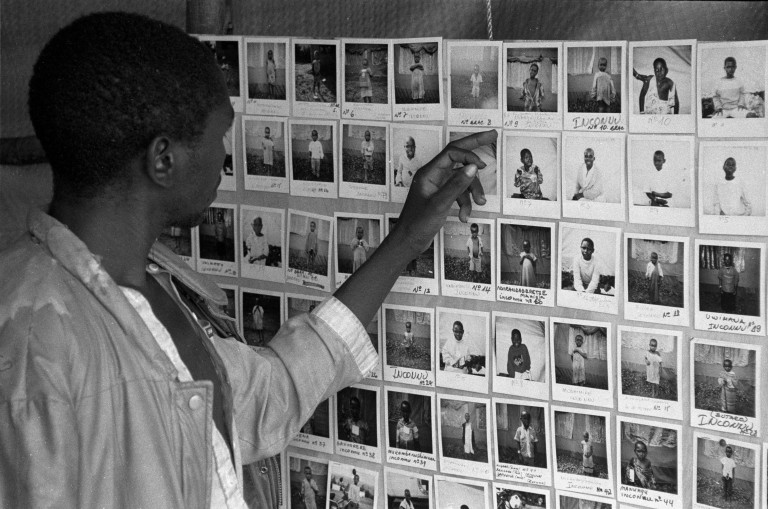
This past summer, I visited Rwanda to see its mountain gorillas. However, learning about the genocide and Rwanda’s reconciliation efforts left a deeper impression on me.
Between April and July 1994, 800,000 people—and possibly as many as one million—were killed. Most victims were Tutsi, although moderate Hutu who opposed the violence were also murdered. Extremist leaders organized the genocide, which was carried out by government forces, the Interahamwe militia, local officials, and recruited or coerced civilians.
Hutu and Tutsi are frequently called tribes, but this description is misleading. Before colonial rule, they were largely social categories within one society, not separate ethnic nations. They spoke Kinyarwanda, shared customs and religion, lived together, and frequently intermarried. Hutu were associated principally with farming, while Tutsi were associated with cattle ownership and often occupied higher levels of the monarchy. The boundaries were flexible: a prosperous Hutu who acquired a substantial cattle herd could sometimes become socially identified as Tutsi, while an impoverished Tutsi could lose that status.
After the First World War, Belgium assumed control of Rwanda from Germany and transformed these distinctions into rigid ethnic classifications. Officials embraced the discredited “Hamitic hypothesis,” a racial theory portraying Tutsi as a superior people originating outside central Africa. Belgians favored Tutsi for education and government while treating Hutu as inferior. Catholic schools initially reinforced this system by educating the Tutsi elite.
During the 1930s, Belgium introduced identity cards classifying Rwandans as Hutu, Tutsi, or Twa. Later, Belgian administrators and many Catholic leaders shifted their support toward the Hutu majority. This contributed to the 1959 Hutu revolution, violence against Tutsi communities, and the flight of many Tutsi. Belgium did not create every disagreement, but its policies racialized and intensified existing divisions. In 1994, its identity cards were used at roadblocks to identify Tutsi for execution.
The immediate crisis began on April 6, 1994, when an airplane carrying Rwanda’s Hutu president, Juvénal Habyarimana, was shot down near Kigali. Extremist leaders used his death as the signal to begin a prepared extermination campaign. Radio broadcasts spread hatred, officials distributed weapons and lists of intended victims, and militias established roadblocks. The violence shattered families and communities; even some people in mixed Hutu-Tutsi families participated in or were forced to permit the killing of spouses and children. The genocide ended after the mainly Tutsi Rwandan Patriotic Front captured Kigali and defeated the genocidal government in July.
The Roman Catholic Church held enormous influence through its schools, hospitals, and social programs. Its conduct was not uniform. Some priests, nuns, and lay Catholics risked or sacrificed their lives to shelter people. Others remained silent, cooperated with officials, abandoned refugees, or participated in crimes. Several clergy members were later prosecuted.
Because churches had previously provided sanctuary, thousands of Tutsi sought protection inside them. Tragically, churches became major killing grounds. Massacres occurred at Nyamata, Ntarama, Nyarubuye, Cyahinda, and other parishes. At certain locations, officials or clergy gathered refugees, supplied information to killers, or failed to intervene. Militias attacked people with guns, grenades, machetes, and clubs. Some churches are now memorials preserving victims’ belongings and remains. Our group visited one such site, where hundreds of coffins made the tragedy painfully real.
The worldwide Catholic Church did not order the genocide, and many Catholics were victims or rescuers. Nevertheless, elements of the Rwandan Church failed to condemn the extermination clearly, and individual clergy betrayed people who trusted them. On March 20, 2017, Pope Francis met President Paul Kagame and asked God’s forgiveness for the sins and failings of Catholics, including clergy who succumbed to hatred and violence. The Vatican hoped this acknowledgment would help bring about a “purification of memory.” Disillusionment with the Church after the genocide also reportedly contributed to some Rwandans embracing Islam or other faiths.
Rwanda’s reconciliation program has combined justice, remembrance, and reconstruction. The International Criminal Tribunal for Rwanda prosecuted leading organizers, national courts tried other defendants, and community-based gacaca courts heard more than one million cases. These proceedings enabled perpetrators to confess and survivors to learn how relatives died. The government has discouraged official distinctions between Hutu and Tutsi and promoted a shared Rwandan identity.
Our group visited one of Rwanda’s reconciliation villages, where survivors and perpetrators live side by side. One former perpetrator had served eight years in prison. After his release, he located the bodies of people he had killed and showed their remains to surviving relatives. Such encounters cannot erase grief, but they can establish truth and make forgiveness possible.
Reconciliation remains difficult. Survivors continue to experience trauma, poverty, and loss. It cannot mean forgetting the genocide or avoiding accountability. It requires justice, remembrance, acknowledgment of colonial and religious failures, and sustained dialogue. Rwanda demonstrates how institutions can deepen divisions and how determined reconciliation can help a society rebuild.
[/fusion_text][/fusion_builder_column][/fusion_builder_row][/fusion_builder_container]
