
Introduction
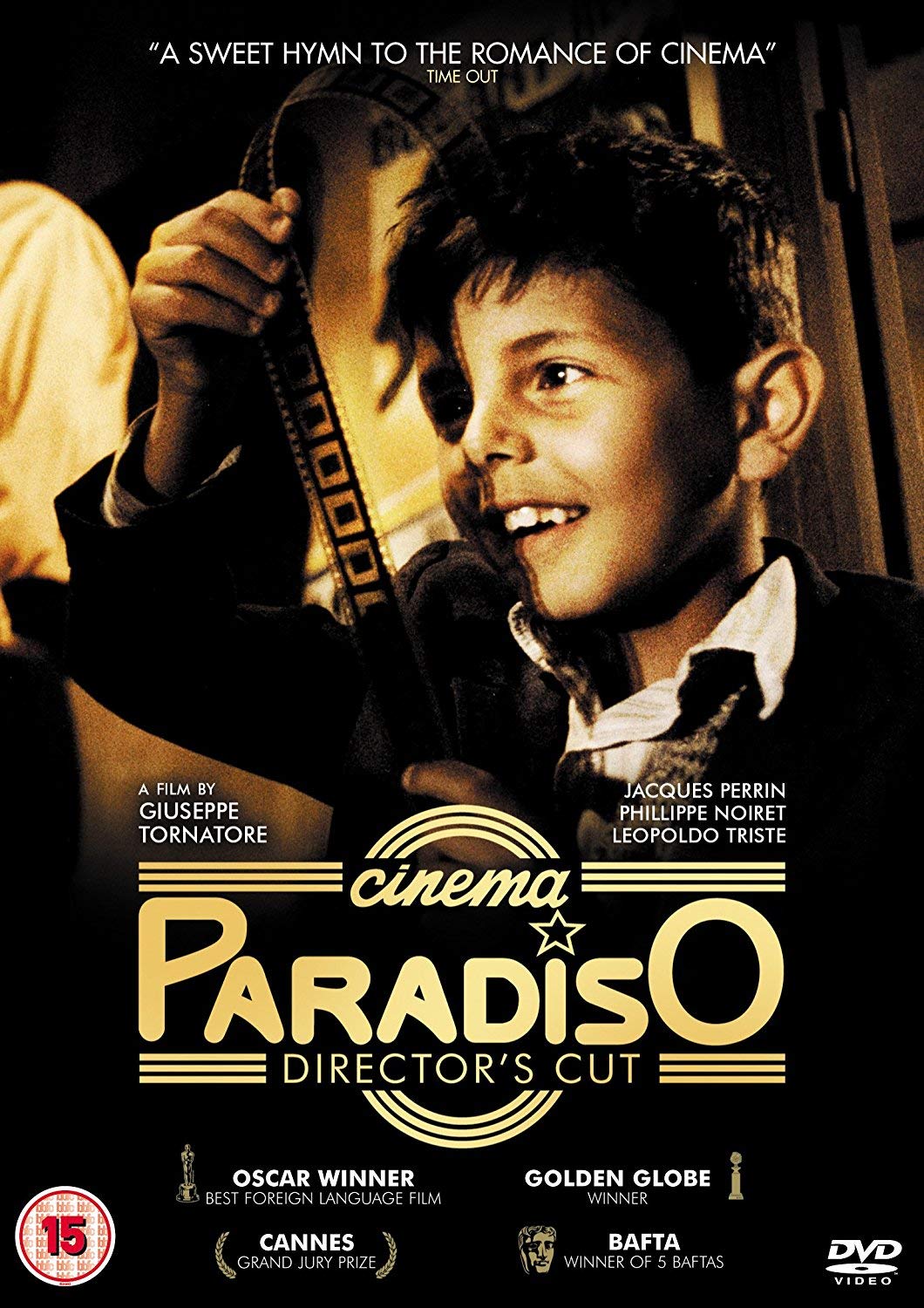
I was reminded about Cinema Paradiso after reading a book that focused on the Allied campaign in Italy during World War II from 1943-1945. While the war was primarily fought against Germans, not Italians, it created severe destruction in Italy. As a result, the Italian economy was devastated, resulting in widespread poverty. Cinema Paradiso focuses on a small village in Sicily where the theater is the focus of the community.
Main
Cinema Paradiso is more than a film about movies; it is a musing about memory, love, friendship, and the passage of time. Directed by Giuseppe Tornatore, the film tells the story of Salvatore Di Vita, a successful filmmaker who reflects on his childhood in a small Sicilian village, after learning of the death of Alfredo, the projectionist who became his mentor. Through its emotional storytelling, unforgettable characters, and deep appreciation for cinema itself, Cinema Paradiso has become one of the most beloved international films ever made.
The movie begins in Rome, where Salvatore, now an accomplished director known as Toto, receives news that Alfredo has died. This event triggers a flood of memories that transports him back to post–World War II Sicily. As a young boy, Toto is fascinated by the local movie theater, Cinema Paradiso. The theater is more than just a building; it is the center of community life. Villagers — the few rich and the many poor– gather there to laugh, cry, argue, and dream together. For the people of the town, movies provide escape from poverty, hardship, and routine. Through Toto’s eyes, viewers witness the magical power of cinema to inspire imagination and hope.
One of the most important relationships in the film is the friendship between Toto and Alfredo. Alfredo initially sees Toto as an annoying child constantly interfering in the projection booth, but over time he becomes a father figure and teacher. Alfredo teaches Toto not only how films are projected but also how to understand life itself. Their bond is central to the emotional strength of the movie. Alfredo encourages Toto to pursue a future beyond the limitations of the small town, even though it pains him to see the boy leave. His advice reflects one of the film’s major themes: the tension between nostalgia and personal growth. While memories are valuable, Alfredo believes that remaining trapped in the past prevents people from fulfilling their potential. Alfredo stresses that once Toto leaves the village, he must never return because nostalgia will retard his career.
The film also explores the idea of first love through Toto’s relationship with Elena. As a teenager, Toto falls deeply in love with her, and their romance is portrayed with tenderness and realism. Elena’s father, the bank manager, opposes their union. To prevent their possible marriage, he moves the family to another community and takes steps that prevent Toto’s tender letters from reaching Elena. These circumstances and miscommunication separate them, leaving Toto heartbroken. This lost love contributes to the bittersweet tone of the film. Like many people looking back on their youth, Toto realizes that some moments can never be recovered. The sadness of missed opportunities and fading connections adds emotional depth to the story. Because of Elena’s rejection, Toto subsequently has many affairs but cannot love another person.
Throughout the movie, cinema is depicted as a communal experience capable of uniting people from different backgrounds. In one memorable scene, Alfredo projects a movie onto the wall of a nearby building so the entire town can watch it together outdoors. This moment symbolizes the joy and shared humanity that movies can create. The theater becomes a place where ordinary people experience wonder, passion, and emotional release.
The film’s visual style and music further enhance its emotional impact. The cinematography captures the warmth and charm of Sicilian village life, contrasting youthful innocence with the melancholy of adulthood. Equally important is the score composed by Ennio Morricone and his son Andrea Morricone. The music is haunting, romantic, and deeply nostalgic, perfectly matching the film’s themes. The score has become iconic and is widely regarded as one of the greatest in cinematic history.
Initially, the local priest imposes severe censorship, preventing kissing scenes from being shown despite the villages desire to see emotional embraces. As the town develops, the villagers discard his censorship. In the real world, Italians have discarded the prohibitions of the church; instead, they embrace modernity and football.
The ending of Cinema Paradiso is particularly powerful. After Alfredo’s funeral, Toto receives a reel of film left to him by his old mentor. The reel contains all the romantic scenes that had been censored from movies shown in the village years earlier. Watching these scenes, Toto is overwhelmed with emotion as he remembers his childhood, Alfredo’s guidance, and the beauty of cinema itself. This final scene serves as a tribute to love, memory, and the enduring magic of movies.
Alfredo predicts that, contrary to expectation, life in the village will change, becoming a modern town. Indeed, the horse drawn carriages are replaced by automobiles, Cinema Paradiso loses its allure, and it is torn down.
Cinema Paradiso is a deeply moving film that explores the relationship between memory and identity. Through Toto’s journey, the movie examines friendship, ambition, lost love, and the emotional power of cinema. Its universal themes resonate with audiences across cultures because everyone understands the longing for childhood and the pain of time passing. More than thirty years after its release, the film continues to inspire viewers with its heartfelt storytelling and celebration of human connection. Cinema Paradiso reminds us that while life changes and people disappear, memories and art can preserve the emotions that define who we are.
Conclusion
Like Toto, I also had to depart my comfortable hometown of Houston, Texas because antisemitism prevented the most important businesses from hiring Jews. Leaving lifelong friends and the comforts of home was difficult. That said, I knew that greener pastures lay on Wall Street.
While New York City was challenging, I was able through very hard work and luck to attain a very good, but not top tier career at Morgan Stanley. I became a partner in 1984 where I was the head corporate bond trader. That said, despite living in NYC vicinity for nearly 40 years, I developed wonderful working alliances, but not long-standing friends.
Alas, there are tradeoffs in life. Like Toto, I learned first-hand the trade-offs of nostalgia and career success. My major memories of Wall Street are my bank account. Houston is no longer the quaint town of my youth, but a major, bustling, uncomfortable metropolitan area. No longer a bastion of the Old South, where Jesus Christ and Robert E. Lee were revered, it is now a burgeoning, bustling, ethnically diverse metropolitan area.
Like all of us, I would give a lot of money for a last conversation with my wonderful parents. It would be a blessing to enjoy the wonderful family gatherings at Passover, Thanksgiving, and Christmas one more time.
I welcome your comments and constructive responses. Please email me at ernestwerlin@gmail.com.
