
Several weeks ago, I saw, for the fifth time, Fiddler on the Roof, which is based on Sholem Aleichem’s short stories. Sadly, for hundreds of years Russian Tsars used the Cossacks to implement murderous pogroms against the helpless Jews of their Empire. At the end of the play, the Cossacks forced out the Jewish community from the fictional village of Anatevka.
The term “pogrom” is most commonly used to describe outbreaks of anti-Jewish violence in the Russian Empire during the late 19th and early 20th centuries. These events were often triggered by periods of social and political instability. Following the assassination of Alexander II (1881), a wave of pogroms swept through parts of the empire. Jews were frequently scapegoated for economic hardship, political unrest, and revolutionary activity, despite lacking real power in these spheres.
Who were the Cossacks?
The Cossacks were a distinct group of militarized communities that emerged along the frontier regions of Eastern Europe between the 15th and 17th centuries. Originating primarily in what is now Ukraine and southern Russia, they were initially composed of runaway serfs, adventurers, and others seeking freedom from feudal authority. Over time, these communities developed their own traditions, elected leaders, and military structures. Known for their skill as cavalry fighters, the Cossacks played a crucial role in regional conflicts and border defense. However, their later integration into imperial systems—particularly the Russian Empire—also tied them to episodes of violence, including their involvement in anti-Jewish pogroms. Over time the Cossacks were responsible for widespread destruction of Jewish communities, killing millions of Jews.
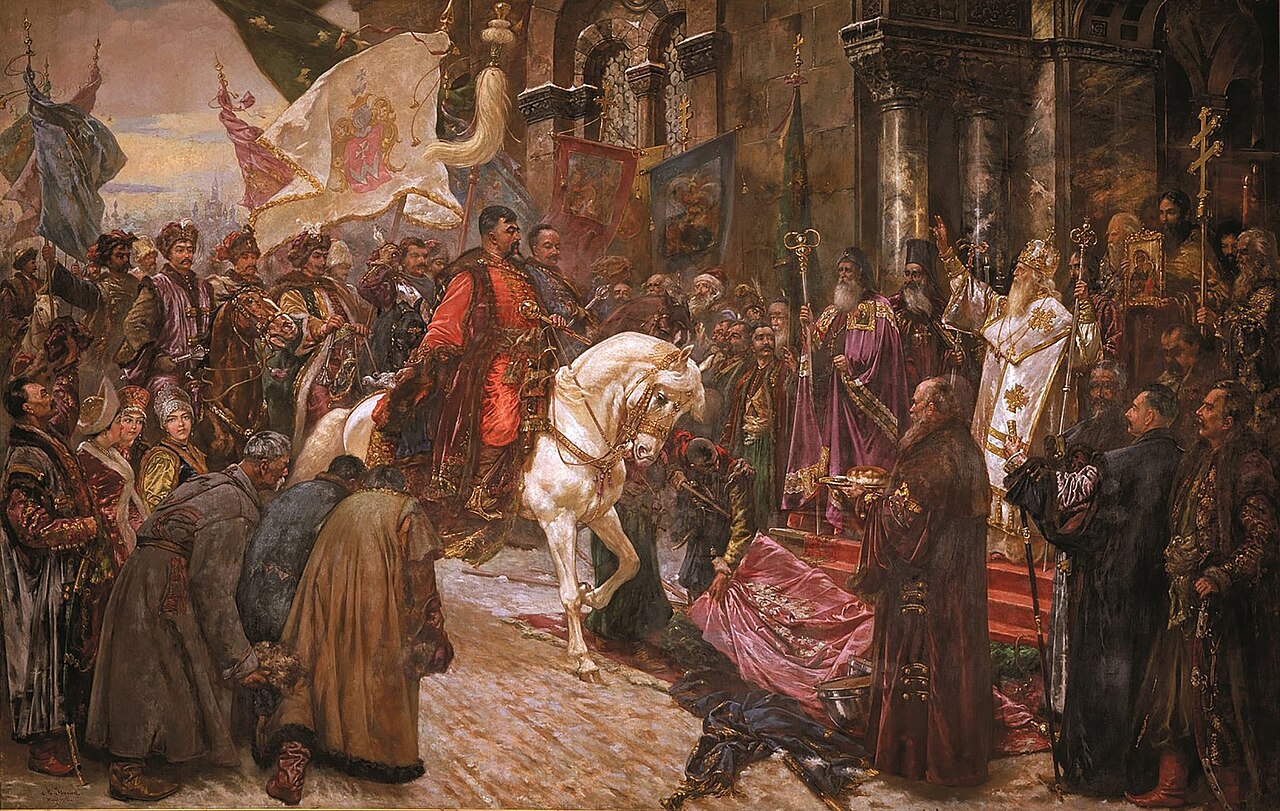
They often served as mercenaries or allies to larger powers, including the Polish Lithuanian Commonwealth and the Russian state. One of the most significant early events involving Cossacks was the Khmelnytsky Uprising (1648), led by Bohdan Khmelnytsky. This revolt was directed against Polish rule in Ukrainian territories but resulted in widespread violence against Jewish communities, who were often associated with Polish landlords as tax collectors or estate managers. Tens of thousands of Jews were killed during this uprising, establishing a historical precedent that would later shape perceptions of Cossacks in relation to anti-Jewish violence.
Status of Jews in the Russian Empire
While some Jews served as tax collectors or estate managers for Polish landlords, most Jews had low level positions, barely eking out a living. They were confined to living in villages and relegated to menial jobs. Only a handful of Jews were allowed to reside in Petrograd, Moscow, or Kiev.
By the 18th and 19th centuries, many Cossack groups had been absorbed into the Russian Empire. In exchange for land, privileges, and a degree of local autonomy, they served as loyal military forces. The Russian state relied on them not only for frontier defense but also for internal security. Cossacks were frequently deployed to suppress uprisings, disperse protests, and maintain order in restive regions. This role increasingly positioned them as instruments of state authority rather than independent actors.
The Decline of Cossack under the Bolsheviks
During the Russian Revolution, some Cossacks fought with the anti-Bolshevik “White Forces” while others joined the Red Army. This internal split weakened their cohesion. After the Bolsheviks emerged victorious, the new Soviet Government viewed the Cossacks with suspicion due to their association with the old regime.
The Emigration of Jews
Because of their horrible treatment, about 2 to 2.5 million Jews emigrated out of the Russian empire starting in the 1860’s. While most Jews left for the United States, others went to Western Europe, Palestine, South America and South Africa.
Changing Jewish Social, Political, and Economic Conditions
While life for Jews in the late 19th century improved in Western Europe, their experience in Russia deteriorated. The French Revolution led to the elimination of Jewish confinement in ghettos in France, Germany, Austro-Hungary and most of Italy.
Bolshevik Treatment of Jews
The Russian Revolution led to significant improvement in the life of Jews within the Soviet Union. While Jews participation in professions was limited by severe quotas, their professional status did improve. On Russian passports, Jews had to identify themselves.
