
Introduction
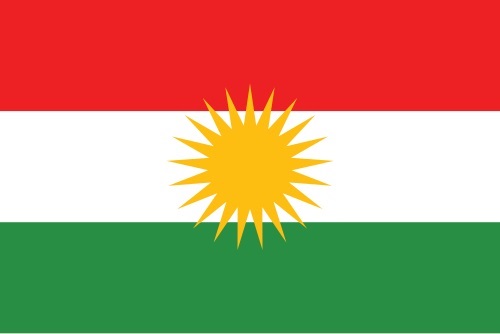
Recent tensions involving Iran have placed the Kurdish population of the Middle East in a complicated position. Many Kurds have long sought an independent nation, commonly referred to as Kurdistan. However, independence for Kurds in one country could create political consequences for Kurdish communities living in neighboring states.
Kurds currently live mainly within the borders of Turkey, Iraq, Iran, and Syria. Any major political change affecting one of these countries could have ripple effects across the region. Because Kurdish communities are spread across several countries, political developments often place them in a delicate and uncertain situation.
Developments in Iraq and Iran
Recent reports suggest that the United States has considered supporting Kurdish opposition groups near the Iraq–Iran border to pressure Iran’s government. The concept behind such discussions is that Kurdish fighters might challenge Iranian forces and potentially encourage broader unrest within the country.
However, analysts warn that such a strategy could increase instability throughout the region. It could provoke retaliation from Iran and deepen ethnic and political tensions in neighboring countries where Kurdish populations also live.
Recent military actions involving Israel and the United States have already heightened tensions in the region. Iran’s responses toward neighboring Gulf states have added further uncertainty. In such an unpredictable geopolitical environment, the possible outcomes remain difficult to predict.
Historical Tensions Between the United States and Iran
Relations between the United States and Iran have been strained for decades. The conflict largely dates back to the 1979 Iranian Revolution, when the Shah of Iran was overthrown and replaced by the Islamic Republic.
Since then, the two countries have frequently found themselves on opposing sides of political and military conflicts in the Middle East. Because of this long-standing hostility, any attempt to significantly weaken or overthrow the Iranian government would likely carry major regional consequences.
Rather than speculate on uncertain geopolitical outcomes, it is helpful to understand the role of one of the region’s most important ethnic groups—the Kurds. If political change ever occurs within Iran, some observers believe Kurdish populations there might eventually seek a level of autonomy similar to what Kurdish communities have achieved in northern Iraq.
Understanding the Kurdish People
Background
The Kurds are one of the largest ethnic groups in the Middle East and are often described as the largest ethnic group in the world without their own independent nation-state. Their traditional homeland, commonly referred to as Kurdistan, spans mountainous areas across parts of Turkey, Iraq, Iran, and Syria.
Despite centuries of political change and conflict, Kurdish communities have maintained a strong cultural identity. Shared language, traditions, and historical experience have helped preserve their identity even though they live within different national borders.
Because of their distinct culture and language, Kurds have frequently faced discrimination, political repression, and limited cultural recognition in the countries where they live.
Kurdish Identity and Cultural Distinction
The Kurds are an Iranian-origin ethnic group whose language belongs to the Iranian branch of the Indo-European language family. Their identity differs from that of the region’s other major ethnic groups, including Arabs, Turks, and Persians.
Arabs belong to the Semitic ethnic group and primarily speak Arabic. Turks belong to the Turkic ethnic group and speak Turkish. Persians, who make up the majority population of Iran, also speak an Indo-European language known as Persian, or Farsi.
Although Kurdish languages share linguistic roots with Persian, Kurdish culture and language are distinct enough to form a separate ethnic identity. Unlike Arabs, Turks, or Persians, however, the Kurds do not have a sovereign nation-state.
Kurdish culture remains vibrant and deeply rooted in tradition. Music, dance, storytelling, and traditional clothing continue to play important roles in preserving Kurdish heritage. One of the most important celebrations is Newroz, the Kurdish New Year, which marks the arrival of spring and symbolizes renewal and cultural pride.
Population and Geographic Distribution
The global Kurdish population is estimated to range between 30 and 45 million people, although exact numbers are difficult to determine. Most Kurds live in four countries: Turkey, Iran, Iraq, and Syria.
Turkey has the largest Kurdish population, estimated at between 15 and 20 million people, primarily in the southeastern part of the country. Iran is home to roughly 8 to 12 million Kurds, mostly located along its western border. Iraq has about 6 to 8 million Kurds, mainly in the north where the Kurdistan Region of Iraq enjoys substantial political autonomy and operates its own regional government. Syria contains a smaller Kurdish population of approximately 2 to 3 million people concentrated in the northeastern part of the country.
Together these regions are often referred to by Kurds as Greater Kurdistan, although no independent Kurdish state currently exists.
Religion and Language
Religion among the Kurds is diverse. Most Kurdish people are Sunni Muslims who follow the Shafi’i school of Islamic law. However, Kurdish communities also include followers of Shia Islam, Alevism, and Yazidism.
The Yazidi faith blends elements of several ancient religious traditions, including influences from Zoroastrianism, Christianity, and Islam. Because Kurdish religious beliefs vary widely, Kurdish identity is often based more strongly on shared language and culture than on religion.
Language plays a central role in Kurdish identity. Kurdish languages belong to the Iranian branch of the Indo-European language family. The most widely spoken dialect is Kurmanji, used mainly in Turkey, Syria, and parts of Iraq. Sorani is spoken primarily in Iraq and Iran and serves as an official language in the Kurdistan Region of Iraq.
During parts of the twentieth century, several governments restricted Kurdish language use and cultural expression. These policies were widely viewed by Kurdish communities as attempts to suppress their cultural identity.
Historical Background and Political Challenges
The modern political situation of the Kurds is closely connected to events following World War I. The 1920 Treaty of Sèvres briefly proposed the creation of a Kurdish state, but the plan was never implemented. Instead, the later Treaty of Lausanne in 1923 divided Kurdish territories among Turkey, Iraq, Syria, and Iran.
As a result, Kurds became minority populations within several countries rather than forming an independent nation. Since then, Kurdish political movements have frequently sought greater autonomy or independence, sometimes leading to tensions or conflict with national governments.
Conclusion
The Kurds remain one of the most significant and historically resilient ethnic groups in the Middle East. Their shared language, traditions, and cultural identity distinguish them from neighboring populations.
Despite decades of discrimination, political repression, and the absence of an independent state, Kurdish communities have preserved their culture and continue to seek greater political recognition and autonomy within the region.
