
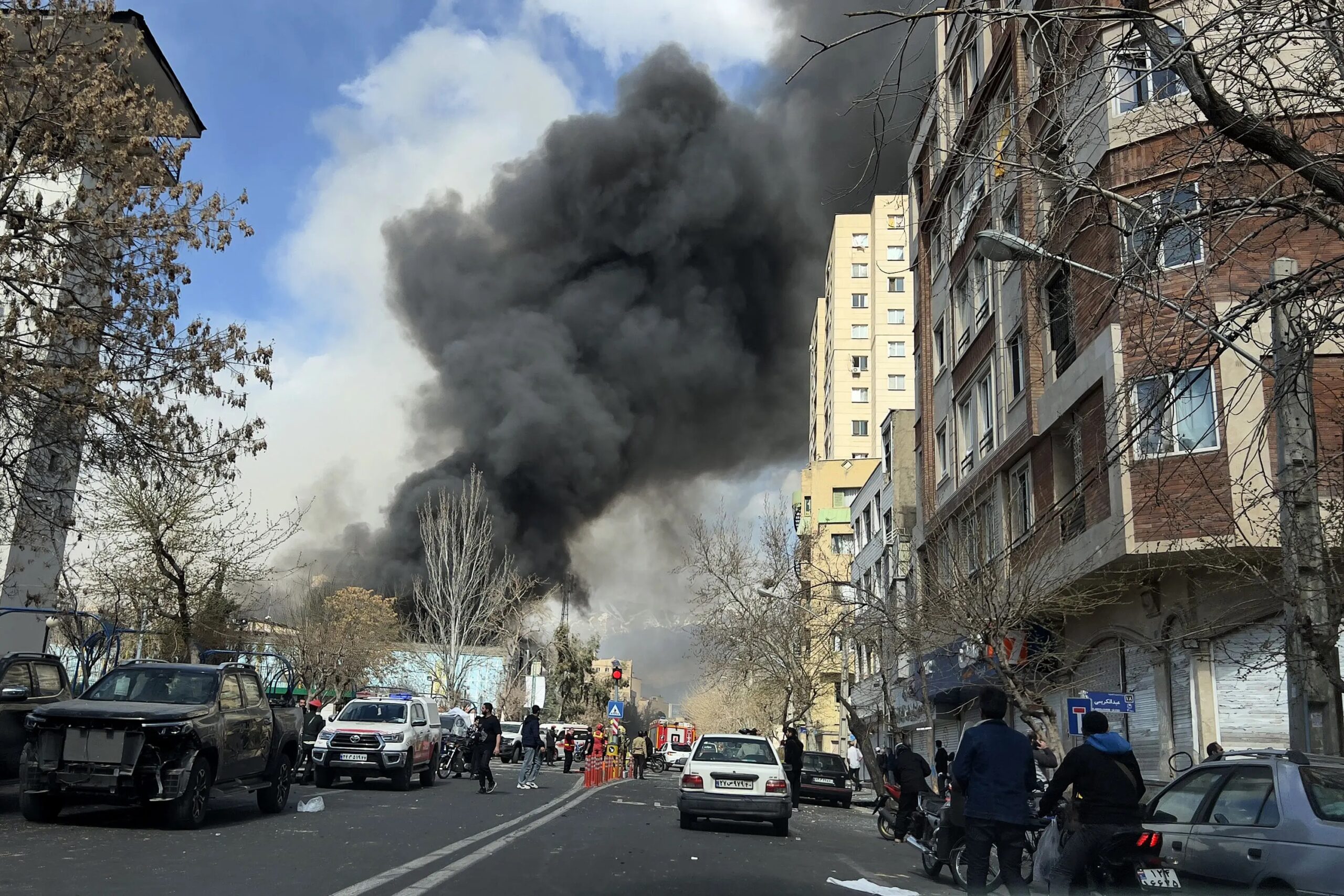
“Sow the wind, reap the whirlwind.”
— Book of Hosea, The Bible
Introduction
Yair Lapid, leader of the centrist Yeh Atid Party, 14th Prime Minister of Israel wrote for The Economist and shared,
“America and Israel did not embark on this operation in the name of economic or geopolitical interests, but because the world is in danger.
If the Iranian regime succeeds in developing nuclear weapons, the world is in danger. If it continues to advance its ballistic-missile program, Israel and every other country in the Middle East are in danger. If the ayatollahs remain in power in Tehran, the citizens of Iran are in danger. The rule of the ayatollahs is not a “government” in the sense we ordinarily understand the term. It is a terrorist organization that has hijacked a state.”
Main
On February 28, 2026, the United States and Israel launched large-scale airstrikes across Iran aimed at crippling its military capabilities and halting its nuclear program. In my view, given that Iran effectively declared war on the United States and Israel in 1979, military action against Iran was warranted. What I did not anticipate, however, was the speed and scale of the economic shock waves that followed.
Oil prices surged rapidly, approaching $100 per barrel. If energy prices remain elevated through the summer, the global economy could face slower growth and rising inflation. The disruption extends beyond oil and gas. Trade throughout much of the Middle East is being interrupted, causing shortages and delays across a range of goods. Industrial commodities and agricultural products, such as fertilizer and tropical fruits, are increasingly stranded far from where they are needed. The longer hostilities continue, the more severe the disruptions will become for businesses and consumers around the world.
For years I have written essays primarily focused on presenting facts. On this occasion, however, I feel compelled to express my opinion regarding the Iran War and the consequences it may bring.
Political Debate
Critics argue that President Trump has not fully explained the strategic case for initiating the conflict or clarified how regime change in Iran might realistically be achieved. At times the administration’s messaging appears inconsistent. One day the president demands Iran’s unconditional surrender; the next he signals openness to ending hostilities and declaring victory. For both ethical and practical reasons, the administration must clearly explain to the American public the sacrifices that may be required to prevail.
Public opinion reflects this uncertainty. A Quinnipiac University poll released on March 9, 2026, found that 40 percent of American voters support military action against Iran while 53 percent oppose it. Iran has long been viewed as a major sponsor of terrorism and has been linked to the deaths of thousands of Americans, so stronger support might have been expected.
Yet the conflict has likely reached a stage where simply declaring victory and halting the bombing campaign would not restore stability. Like Humpty Dumpty, once the pieces have been shattered, they cannot easily be reassembled. Since the oil crisis of 1973, the United States has been the dominant external power in the Middle East. Abruptly ending military operations could damage American credibility in the region for years.
Strategic Reality
When the United States expelled Saddam Hussein’s forces from Kuwait during the First Gulf War, America and thirty-five allied nations assembled roughly 750,000 troops. Replicating that level of mobilization today would be extremely difficult. The United States would likely face challenges both in assembling the manpower and in securing broad allied participation.
Instead, policymakers may consider more limited strategies. One option would be targeted operations aimed at capturing or disabling key Iranian seaports used for oil exports. Disrupting those routes could weaken the regime’s ability to finance its military activities.
Internal unrest within Iran could also play a role. The ruling regime is widely unpopular among segments of the Iranian population. External military pressure combined with domestic resistance might eventually create conditions for political change without requiring a massive foreign ground invasion.
Nevertheless, the central challenge remains clear: air power alone rarely produces regime change. The current air campaign may degrade Iran’s military infrastructure and slow its nuclear ambitions, but the ingredients historically required to overthrow governments—large numbers of ground troops and sustained military presence—are largely absent.
The Nuclear Challenge
The airstrikes targeted missile bases, air defenses, naval facilities, intelligence centers, and leadership compounds. Iran’s Supreme Leader, Ali Khamenei, and several senior officials were reportedly killed. Yet the regime has responded with defiance. Khamenei’s son has reportedly been elevated as successor and is described as even more militant, pledging to continue Iran’s nuclear program and maintaining hostility toward Israel and the West.
Iran’s nuclear infrastructure presents a formidable challenge. Facilities such as the Fordow enrichment plant are buried deep within mountains to protect them from airstrikes and sabotage. Neutralizing such installations without a ground invasion is extraordinarily difficult.
If regime change is truly the objective, “boots on the ground” would almost certainly be required. During the First Gulf War, the United States deployed approximately 540,000 troops, and the combined allied force approached three-quarters of a million. Today the United States lacks that level of readily deployable manpower, and assembling a comparable coalition would be far more difficult.
Iran also represents a larger and more complex challenge than Iraq once did. Its population of roughly ninety-two million people and its vast territory—about the size of Alaska—would complicate any ground campaign. Even assembling the necessary force could take months, pushing the timeline close to the upcoming November elections.
Conclusion
The United States now appears to face a deeply difficult situation. We have indeed “sown the wind,” and we may well “reap the whirlwind.” Iran has already retaliated by launching missile and drone strikes against Saudi Arabia, the United Arab Emirates, Qatar, Bahrain, Kuwait, Oman, and Israel, demonstrating how quickly the conflict can spread across the region.
Energy prices could rise further, weakening Gulf economies and spreading inflation globally. Higher oil prices may also benefit Russia, potentially providing Moscow with an unexpected economic advantage.
While the bombing campaign against Iran may have delivered short-term satisfaction, its long-term consequences could produce prolonged instability across the Middle East and the global economy. Iran has already demanded that airstrikes cease before it will consider negotiations and has called for reparations and a U.S. military withdrawal from the region.
In the end, the United States faces a stark choice: either commit the resources required to fundamentally change Iran’s regime or accept a prolonged conflict that will continue to destabilize the region and strain the global economy. Having already crossed the threshold into war, it is unrealistic to believe that simply declaring victory will restore stability. The whirlwind that has been unleashed will not fade easily.
